
2006-2015: A Decade of Drought, New Coverage and Crop Insurance at Work
A Look Back as ProAg Marks 100 Years, For Generations
 By 2006, crop insurance was already part of annual planning for many producers, and GPS guidance and auto-steer were becoming more common in the field. Ethanol demand was changing the corn market, while commodity prices were heading into a period of sharp swings.
This decade brought the Great Recession, record farm income, the 2012 drought and the 2015 avian influenza outbreak. The drought gave the clearest measure of how much the crop insurance system had truly changed since the ad hoc disaster bills of earlier decades.
Crop Insurance and ProAg History, 2006-2015
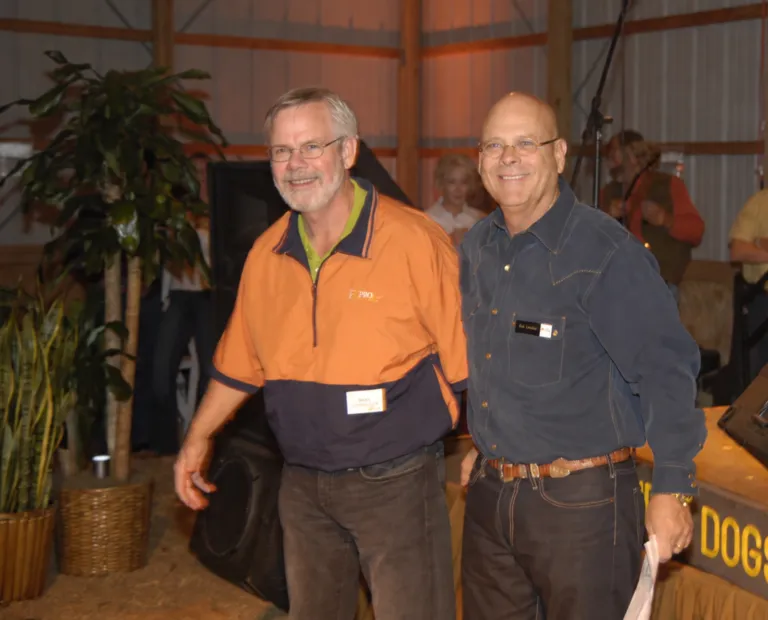 There was a significant change in ProAg leadership to kick off this decade. Michael Connealy and Kendall Jones joined ProAg’s leadership team in 2006, the same year CUNA Mutual Group became the company’s lead reinsurer. CUNA Mutual purchased a minority interest in ProAg the next year and acquired the remaining ProAg’s founding family interests in 2009.
The 2008 Farm Bill linked crop insurance to the Supplemental Revenue Assistance Payments Program, known as SURE. The program provided disaster assistance when qualifying weather or other natural disasters caused a farm’s total revenue to fall below a calculated guarantee. Beginning with the 2009 crop year, producers generally needed at least Catastrophic Risk Protection (CAT) coverage on insurable crops and Noninsured Crop Disaster Assistance Program coverage on non-insurable crops to remain eligible. The amount of protection already purchased also affected the SURE guarantee.
In 2011, Approved Insurance Providers (AIPs) began operating under a revised Standard Reinsurance Agreement (SRA), the contract that sets the business terms for delivering federal crop insurance. The new agreement capped administrative and operating (A&O) payments, placed limits on agent compensation funded by A&O, and rebalanced the sharing of underwriting gains and losses between FCIC and private insurers. It also created an incentive for companies to continue serving producers in 17 underserved or less-served states. The changes were intended to control federal delivery costs while keeping crop insurance available across different crops and regions.
The 2012 Drought put crop insurance to work nationwide and was a true stress test of how this program would work. Drought spread across much of the Farm Belt, U.S. corn yields fell to their lowest level since 1995, and federal crop insurance paid $17.45 billion in indemnities. But most importantly, Congress was not asked to fund a separate ad hoc crop disaster bill for the losses caused by this drought.
The 2014 Farm Bill added the Supplemental Coverage Option (SCO) and the Stacked Income Protection Plan (STAX) for upland cotton. Whole-Farm Revenue Protection (WFRP) became available for the 2015 insurance year, allowing diversified farms to insure revenue from all commodities under one policy. WFRP gave specialty, organic and direct-market operations an option built around the whole farm rather than a single crop.
ProAg changed ownership at the start of 2015, when HCC Insurance Holdings completed its acquisition of Producers Ag Insurance Group from CUNA Mutual Group. The transaction marked HCC’s entry into crop insurance, with ProAg’s existing management continuing to operate the business. On October 27, 2015, Tokio Marine Holdings completed its acquisition of HCC, bringing HCC and ProAg into the Tokio Marine Group. HCC later became known as Tokio Marine HCC.
What Everyday Life Cost – 2006 Compared to 2015
Prices did not move in one direction during these years. Gasoline was slightly cheaper in 2015 than in 2006, while vehicles, homes and several food items cost more. For farm families, those household changes came alongside shifts in fuel, equipment and operating costs.
| Purchased Item | 2006 Price | 2015 Price (Today’s $*) | 2006 Price | 2015 Price (Today’s $) |
| Gasoline (per gallon) | ~$2.57 | ~$4.10 | ~$2.43 | ~$3.30 |
| Milk (per gallon) | ~$3.08 | ~$4.90 | ~$3.42 | ~$4.65 |
| Eggs (per dozen) | ~$1.31 | ~$2.10 | ~$2.47 | ~$3.35 |
| Average New Car Price | ~$28,450 | ~$45,400 | ~$33,420 | ~$45,400 |
| Median Home Value | ~$246,500 | ~$393,600 | ~$294,200 | ~$399,600 |
*Today’s dollar estimates are based on the 2025 annual Consumer Price Index.
The price of eggs tells one of the decade’s agriculture stories. The 2015 avian influenza outbreak affected 50.5 million commercial birds, including approximately 43 million laying hens and pullets. The outbreak became the largest poultry health emergency recorded in the United States at that time. The loss reduced egg supply and contributed to higher consumer prices.
Presidents and National Leadership During the Decade
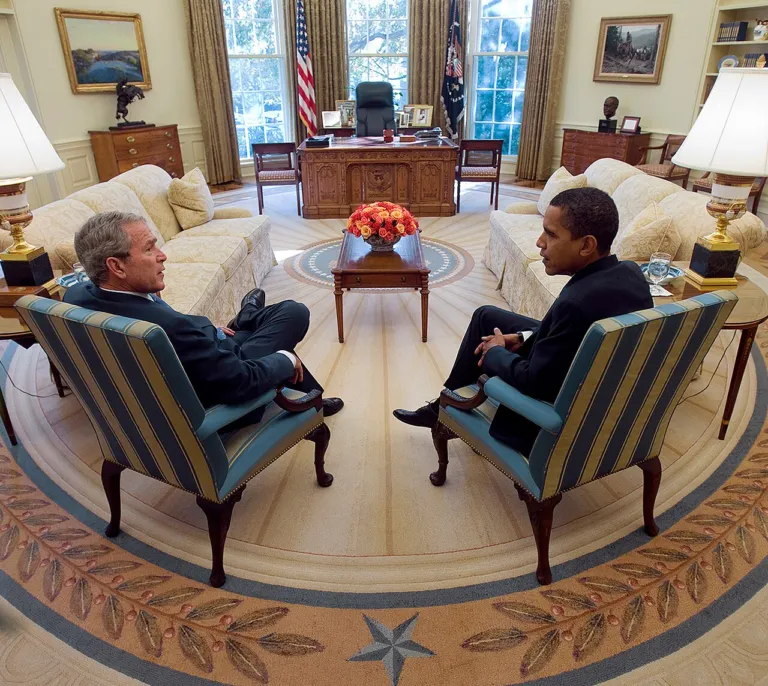 Two presidents served our country during this period marked by financial strain, changing energy policy, severe weather and continued adjustments to the farm safety net.
- George W. Bush (2001–2009) served as president when renewable fuel policy took on a larger role in agriculture. The Energy Independence and Security Act of 2007 expanded the Renewable Fuel Standard, while the 2008 Farm Bill established new disaster programs and increased the role of crop insurance in the farm safety net. His final years in office also included the beginning of the Great Recession.
- Barack Obama (2009–2017) served during the 2012 drought and signed the 2014 Farm Bill. The law added crop insurance options, including SCO, STAX and Whole-Farm Revenue Protection, while also expanding support for beginning farmers, organic production and specialty crops.
Defining American Events, 2006–2015
Many events from these years remain familiar to people who lived through them.
- Apple introduced the iPhone in 2007.
- The Great Recession began in late 2007 and continued through 2009.
- Barack Obama became the first African American president of the United States in 2009.
- The Deepwater Horizon explosion and oil spill occurred in 2010.
- S. forces killed Osama bin Laden in 2011.
- Hurricane Sandy struck the East Coast in 2012.
- The Boston Marathon bombing occurred in 2013.
In summary, federal agricultural and crop insurance policy also changed during this period.
- The Energy Independence and Security Act of 2007 expanded the Renewable Fuel Standard.
- The 2008 Farm Bill established permanent supplemental disaster programs and linked SURE eligibility to crop insurance or NAP coverage.
- The revised 2011 Standard Reinsurance Agreement changed A&O payments, agent compensation rules and the way FCIC and private insurers shared underwriting risk.
- The 2014 Farm Bill authorized new crop insurance options including SCO and STAX.
- Whole-Farm Revenue Protection became available in 2015 for diversified, specialty and organic operations.
Technology Changes Fieldwork
By 2010, yield monitors were used on about half of U.S. corn farms, and roughly one-third used guidance or auto-steer. Guidance systems reduced overlap during field passes, while yield maps helped producers compare performance across a field and adjust seed, fertilizer and other inputs.
As renewable fuel policy added a major source of corn demand, U.S. ethanol production grew by approximately 9 billion gallons from 2000 to 2009, while harvested corn acreage increased by roughly 7.2 million acres. Much of the acreage increase came from 2006 through 2008, when higher corn prices and expanding ethanol capacity influenced planting decisions.
By 2013, U.S. agricultural exports had reached a record, and net farm income was at its highest inflation-adjusted level since 1973. Crop prices and farm income began to ease before the end of 2015.
The 2012 Drought Put Crop Insurance to Work Plan
The 2012 drought gave the crop insurance system its biggest test to date. Producers had purchased coverage before planting, and the program paid more than $17 billion in indemnities when drought cut yields across the Farm Belt. This gave farm families a way to recover after such devastating loss. But most importantly, recovery came through programs already in place, without Congress having to create a separate ad hoc crop disaster bill.
The decade closed with one more expansion of crop coverage and a new chapter in ownership for ProAg. ProAg closed out this decade as part of the Tokio Marine HCC group of companies, continuing its crop insurance work through independent agents who serve farmers and ranchers across the country.