
Screwworm Watch: The Latest Updates Producers Should Know
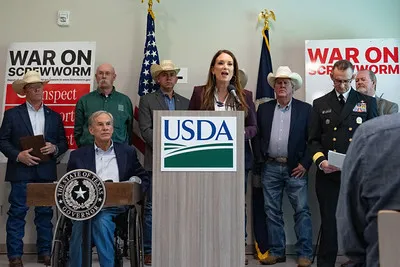
USDA media by Lance Cheung.
The New World screwworm has re-entered the United States and is actively spreading. While the current outbreak is centered in Texas, the implications for livestock producers across the country are real. Here are the latest updates for producers to know.
1. U.S. Case Count Climbs to 27 – Quarantine Zones Are Expanding
Confirmed screwworm cases in the U.S. have reached 27 as of June 26, with 21 currently active across multiple Texas counties. Federal and state agencies are working to contain further spread. The Texas Animal Health Commission has established 10 infested zones, restricting movement of all warm-blooded animals, hides, and carcasses without official inspection and clearance, a sign of how seriously regulators are treating the risk of wider dispersal.
Read more on the latest screwworm updates in Texas.
2. A County-by-County Tracker Is Helping Producers Monitor the Spread
Southwest Texas is currently the epicenter of activity, with cattle accounting for the majority of confirmed cases, followed by sheep and goats. The USDA’s live tracking dashboard maps active and inactive detections by count. It’s recommended that producers anywhere in the country with animals moving through affected regions be checking the updates regularly.
See a Texas county breakdown here.
3. Free Online Inspector Training Is Open in Texas
A free, four-hour online certification course through Texas A&M AgriLife Extension is now available on the AgriLife Learn platform. Texas-based producers, veterinary techs, and industry professionals can use the course to pursue TAHC inspector certification and issue official movement certificates – but any producer anywhere in the country can take it to sharpen their knowledge and inspection practices.
Read how you can get certified as an inspector here.
4. U.S. and Mexico Open Sterile Fly Plant in a Major Cross-Border Push
U.S. Agriculture Secretary Brooke Rollins and Mexican President Claudia Sheinbaum inaugurated a new sterile fly production facility in Chiapas, near the Guatemala border, on June 27. This plant can produce up to 100 million sterile flies per week. The biological containment strategy, the same approach used to eradicate screwworm from the U.S. decades ago, is the most significant long-term line of defense for protecting American livestock herds at the source.