
USDA Crop Progress Report: Corn Advances While Soybean and Pasture Conditions Hold Steady
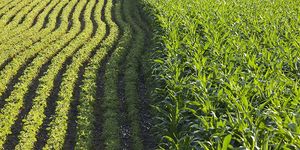 The USDA weekly Crop Progress Report, released Monday, showed corn conditions holding steady week-over-week while soybean ratings slipped slightly, with both pacing behind last year’s conditions. Crop development for both corn and soybeans remains ahead of last year’s pace and the five-year average as the growing season pushes toward late-summer maturity stages.
Corn
- 61% rated good-to-excellent, unchanged from last week but down 11 points from last year (72%).
- Silking at 94% (ahead of last year and the five-year average, both at 93%). Dough stage at 61% (vs. 56% last year, 55% average).
- Dented at 16%, ahead of both last year (13%) and the five-year average (12%).
Soybeans
- 62% rated good-to-excellent, down 1 point from last week and 6 points below last year (68%).
- Blooming at 93% (ahead of last year, 90% and the five-year average, 91%). Pod-setting at 74% (ahead of last year and the five-year average, both 69%).
Winter Wheat
- Harvest reached 91% complete across the top 18 states, up from 86% last week and just above last year (89%) and the five-year average (91%).
- Eight states are 100% harvested, including Kansas, Indiana and Texas and Oklahoma, with Nebraska at 97% harvested. Washington is pacing ahead of the five-year average, 67% harvested.
Spring Wheat
- 51% of the crop rated good-to-excellent, down 4 points from last week but ahead of last year (49%).
- Harvest progress reached 24%, well ahead of last year (14%) and the five-year average (19%).
Pasture and Range
- 25% of pasture and range rated good-to-excellent nationally, unchanged from last week but down 14 points from last year (39%), as dry conditions continue to weigh on forage across parts of the Plains and West.
Looking ahead, DTN Ag Meteorologist John Baranick notes that repeated rounds of rain and storms are likely across a large stretch of the Corn Belt this week, even as growers farther south contend with rising heat and dry conditions.
Read the full USDA report here and more commentary from DTN.