
crop and livestock income protection (CLIP)

The Crop and Livestock Income Protection policy helps protect more of your operations combined revenue.
Crop and Livestock Income Protection (CLIP) is a federal crop insurance policy that works with two or more qualifying Revenue Protection (RP) policies in the same county. It applies one CLIP coverage level to the eligible commodities you select, helping protect their combined revenue at coverage levels up to 85%.
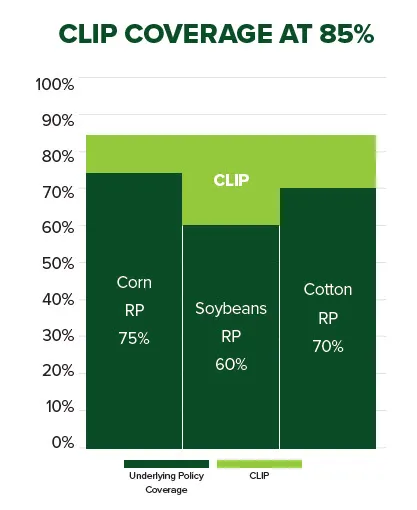

Protect your combined revenue
CLIP evaluates the revenue from selected eligible commodities together in one county, providing a broader view of the operation than individual crop policies alone.

Explore higher coverage levels
Choose a CLIP coverage level from 55% through 85%, in 5% increments, subject to the applicable coverage level cap.

Put diversification to work
Combining multiple commodities may provide premium savings compared with purchasing the same higher coverage level separately on each underlying RP policy.

Keep underlying RP protection in place
CLIP does not replace the selected RP policies. Their approved yields, prices, unit structures and applicable loss procedures remain in place while CLIP provides an additional layer of combined revenue protection.
What is Crop and Livestock Income Protection (CLIP)?
CLIP provides umbrella revenue coverage for two or more qualifying RP policies in the same county. The policy allows selected crops and eligible livestock to be evaluated together under one CLIP coverage level.
The underlying RP policies continue to protect each commodity individually. CLIP then helps cover the difference between those underlying coverage levels and the higher CLIP level selected for the combined unit.
Because the selected commodities are combined into one CLIP unit, their revenue results are considered together. Stronger performance from one commodity may offset weaker performance from another. This approach can create premium savings through diversification, although it also means CLIP may not be the right strategy for every operation.
How Does the CLIP Policy Work?
1. Select eligible commodities
Choose two or more eligible commodities covered by RP policies in the same county. You are not required to place every RP-insured commodity under CLIP.
Once a commodity is selected, all insurable planted acreage or insurable head of that commodity in the county must be included under CLIP.
2. Meet the liability requirements
At least two of the underlying RP commodities must each account for 10% or more of the total RP liability for all commodities selected under CLIP.
The CLIP policy and all selected underlying RP policies must be written through the same Approved Insurance Provider and agency.
3. Continue reporting through the underlying policies
CLIP does not require separate acreage, head or production reports. Accepted reporting from the underlying RP policies is used to administer CLIP.
The underlying RP policies retain their existing unit structures. The designated commodities are combined only for the CLIP calculation.
4. Settle the underlying RP policies first
Any losses under the individual RP policies are determined first. Once all production to count has been reported and the underlying claim determinations are complete, CLIP compares:
- The combined RP and CLIP guarantee
- The total value of production to count
- Any indemnities paid by the underlying RP policies
A CLIP indemnity may be due when the combined production value and underlying RP indemnities fall below the combined guarantee. CLIP can provide an indemnity in some situations where none of the underlying RP policies independently trigger a payment.
| Policy Feature | CLIP Requirement |
| Type of Coverage | Individual-based umbrella revenue coverage |
| Underlying Insurance | Revenue Protection, Plan 02 |
| Minimum Number of Commodities | Two qualifying RP commodities in the same county |
| Liability Requirement | At least two selected commodities must each represent 10% or more of the total designated RP liability |
| Coverage Levels | 55% to 85% in 5% increments, subject to the coverage level cap |
| Policy Structure | One CLIP policy and one CLIP unit per county |
| Underlying Units | Existing RP unit structures remain in place |
| Sales Closing Date | Earliest applicable spring sales closing date among the designated RP commodities |
| Contract Change Date | November 30 |
| Reporting | No separate CLIP acreage, head or production reports |
| Administrative Fee | One administrative fee for the CLIP policy |
| Prevented Planting | Not covered or included in CLIP eligibility and claim calculations |
Could CLIP Fit Your Operation?
CLIP may be worth discussing with your crop insurance agent when:
- You insure two or more eligible commodities with RP in the same county.
- You want to explore a higher level of combined revenue protection.
- Your crop or livestock mix provides meaningful diversification.
- You understand that the results of all selected commodities are evaluated together.
- You want to compare CLIP with purchasing higher coverage separately on each RP policy.
Coverage needs differ by operation. Acreage, head, commodity mix, underlying coverage levels and each commodity’s share of total liability can all affect eligibility, premium and potential protection.
- Barley, spring
- Canola, spring
- Corn
- Cotton
- Dry beans
- Dry peas
- Flax
- Grain sorghum
- Oats, spring
- Peanuts
- Popcorn
- Rice
- Soybeans
- Sunflowers
- Wheat, spring
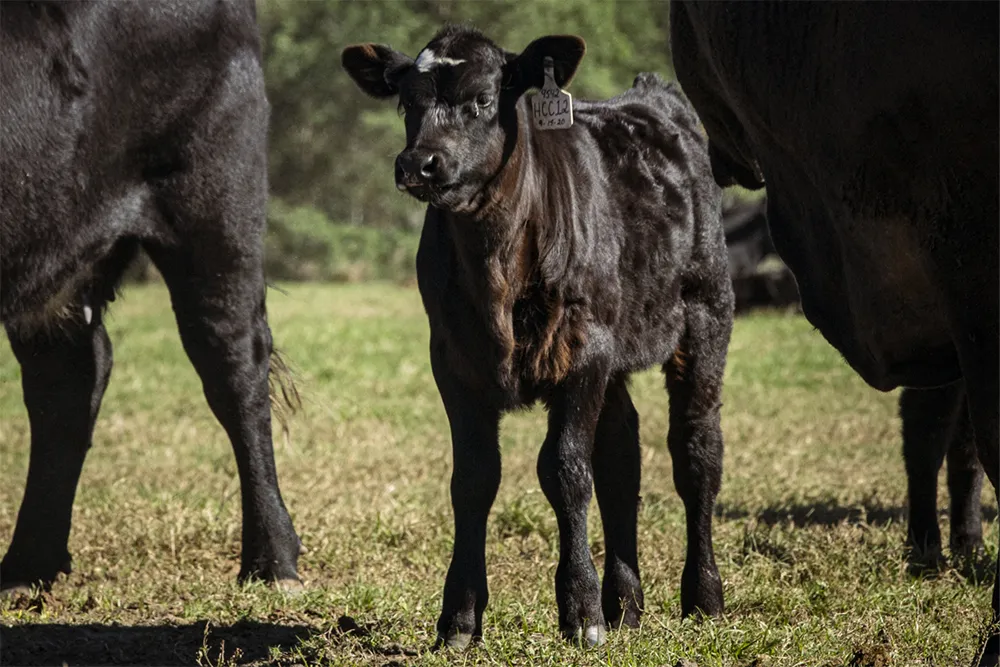
- Weaned calves insured through Weaned Calf Risk Protection
Livestock eligibility: Livestock Risk Protection (LRP), Dairy Revenue Protection (DRP) and Livestock Gross Margin (LGM) are not eligible.
Where Is CLIP Available?
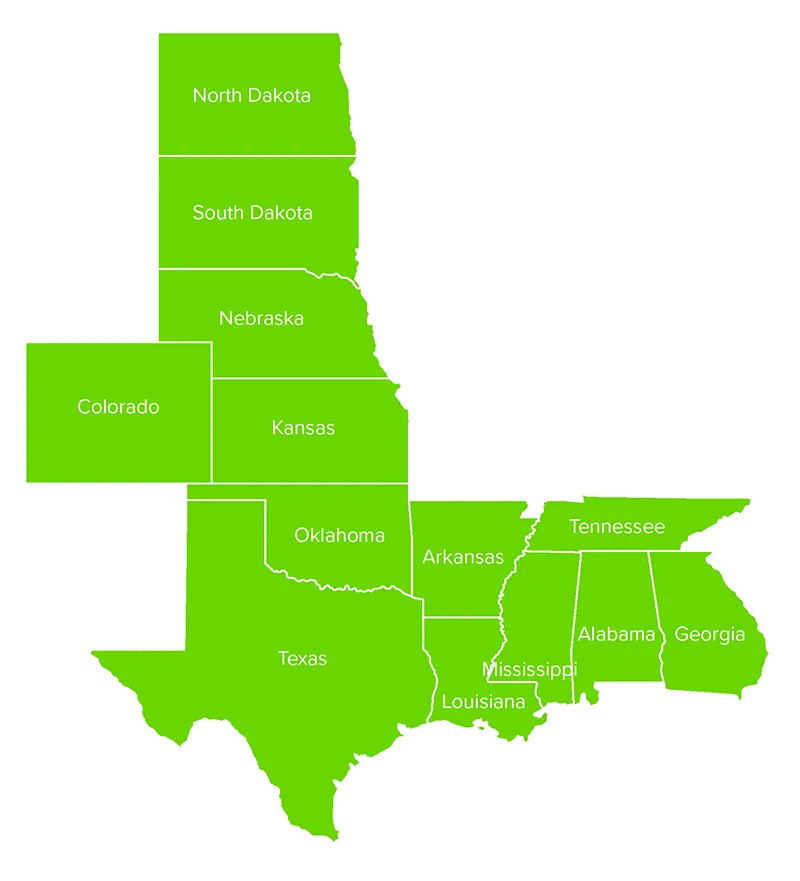
CLIP is available for eligible commodities in select counties within:
- Alabama
- Arkansas
- Colorado
- Georgia
- Kansas
- Louisiana
- Mississippi
- Nebraska
- North Dakota
- Oklahoma
- South Dakota
- Tennessee
- Texas
Availability varies by county and commodity. Review current RMA actuarial documents or contact a ProAg agent to confirm whether CLIP is available for your operation.
How Does CLIP Work With Other Crop Insurance Coverage?
CLIP may be used with underlying RP policies that include:
- Hurricane Insurance Protection-Wind Index, including the Tropical Storm option
- Enhanced Coverage Option (ECO)
- Margin Coverage Option (MCO)
- High-Risk Land Exclusion Option
CLIP cannot be elected with underlying RP policies that include:
- Malting Barley Endorsement
- Margin Protection
- Post Application Coverage Endorsement
- Stacked Income Protection (STAX)
- Supplemental Coverage Option (SCO)
CLIP is not available with Yield Protection, Revenue Protection with Harvest Price Exclusion, area plans or prevented planting coverage. Additional policy-specific exclusions may apply.
No. You may select which eligible RP commodities, minimum of two, to insure under CLIP. However, once a commodity is selected, all insurable planted acreage or insurable head for that commodity in the county must be included.
No. Different types or practices of the same crop do not count as separate commodities. Irrigated and non-irrigated corn, for example, remain one commodity for CLIP eligibility.
Yes. CLIP may provide a payment when combined revenue falls below the CLIP guarantee, even when none of the individual RP policies trigger an indemnity.
No. CLIP covers insurable planted acreage and the eligible insured head. Prevented planting acres and payments are not included in eligibility or claim calculations.
CLIP and its coverage level must be elected by the earliest applicable spring sales closing date among the underlying RP commodities selected for the policy.
CLIP premium rates are calculated using the commodities selected and the liability associated with each commodity. Because every policy mix is different, rates are not published as a single standard amount. A ProAg agent can provide an accurate quote and help compare CLIP with other coverage strategies.
Build Coverage Around the Way Your Operation is Structured
CLIP can create another opportunity to protect revenue across a diversified operation, but the right strategy depends on your county, commodity mix, liability and existing RP coverage.
A ProAg agent can help you understand the requirements, compare coverage and premium scenarios and determine whether CLIP supports your risk management goals.



Find a ProAg Agent
Pro Ag Management, Inc.* (collectively with its corporate affiliates, “ProAg®”) is a managing general agency representing several risk bearing insurance companies, including Producers Agriculture Insurance Company and U.S. Specialty Insurance Company and doing business as Pro Ag Insurance Services, Inc. in California, CA Entity License #0F34212. The insurance products described on this website may not be a complete list of all products offered and may not be offered in all states. The provided information does not amend, or otherwise affect, the terms and conditions of any insurance policy issued by ProAg or any of its subsidiaries; always refer to the policy provisions. Actual coverages will vary based on the terms and conditions of the policy issued.